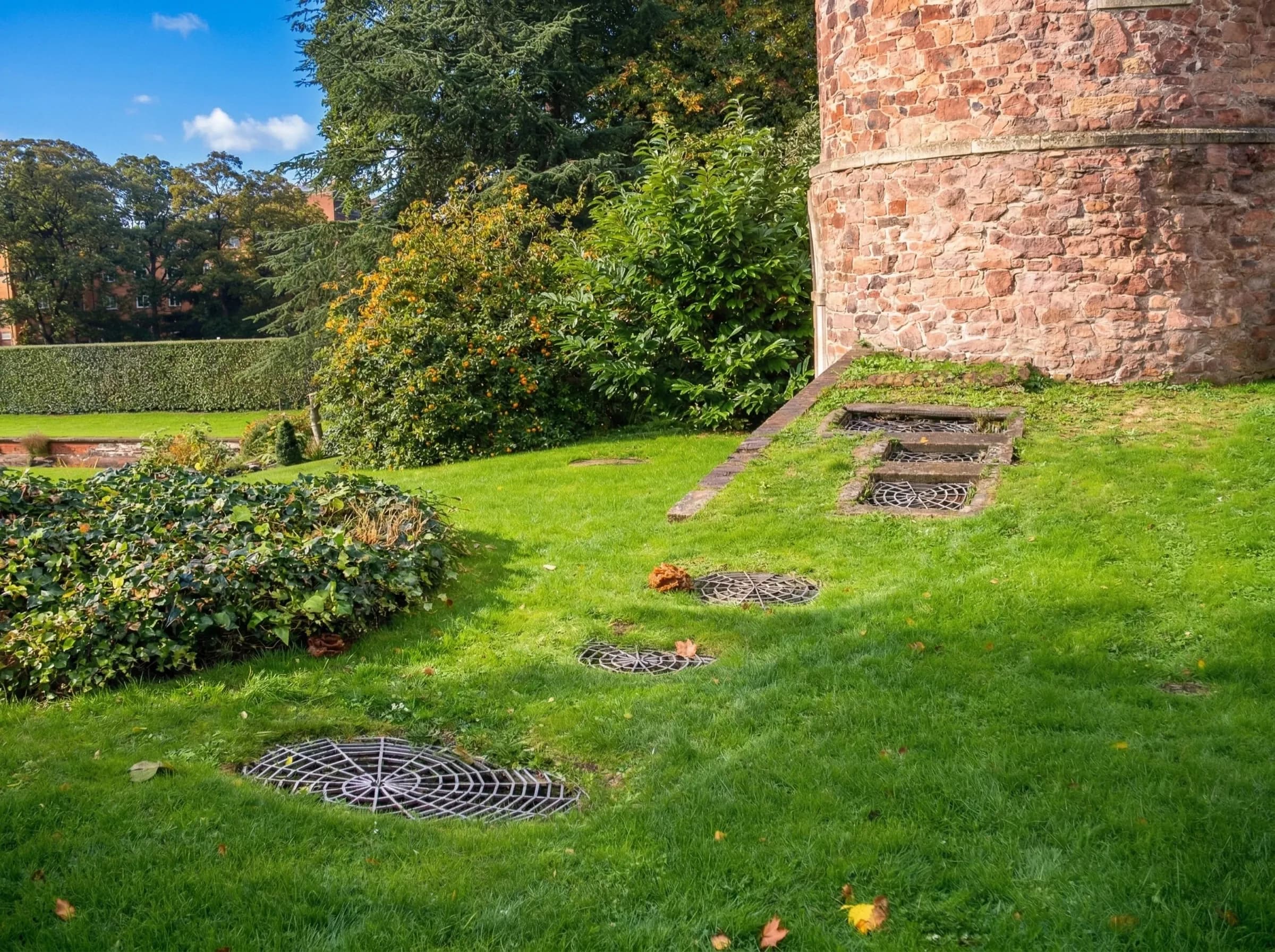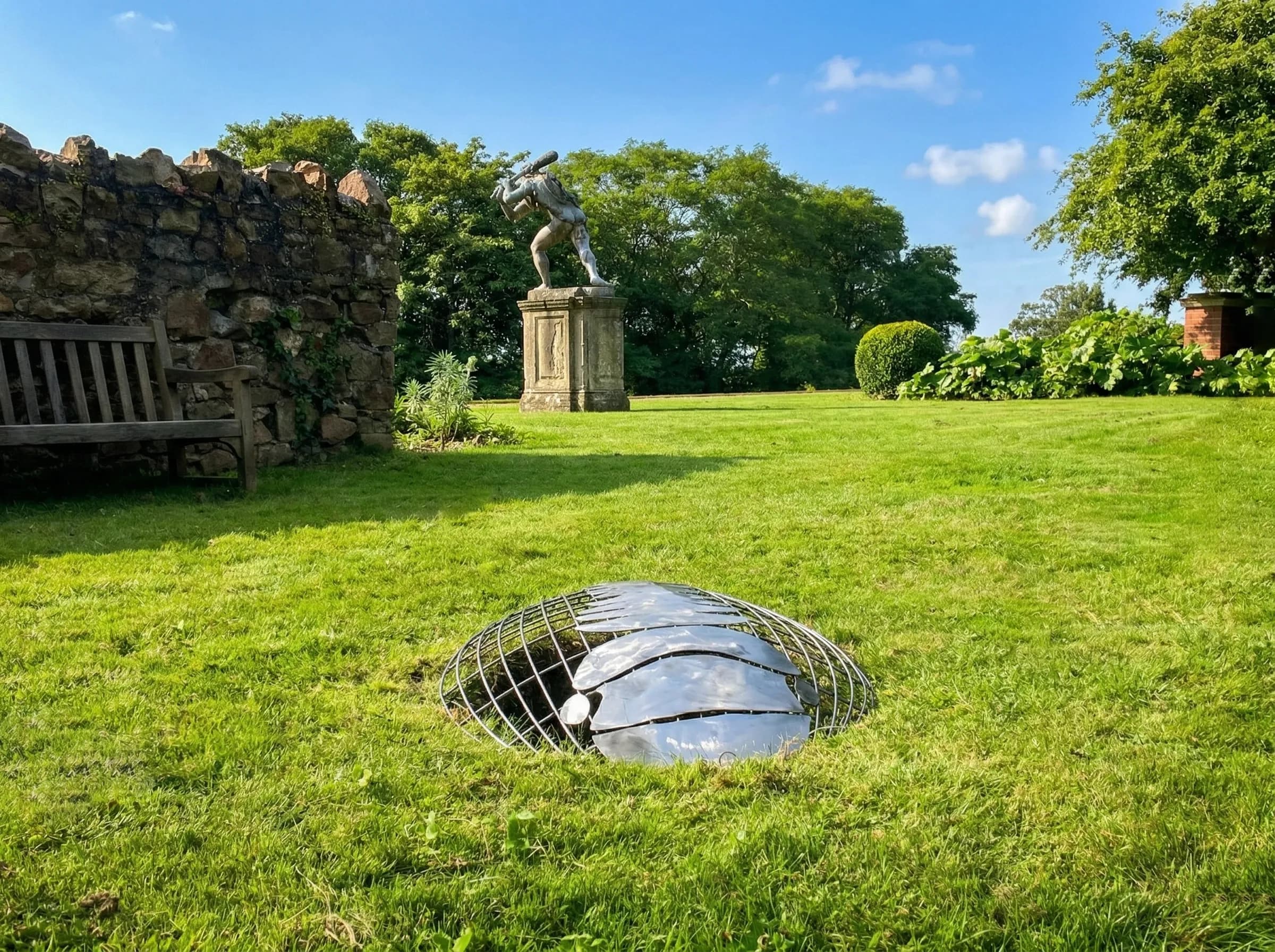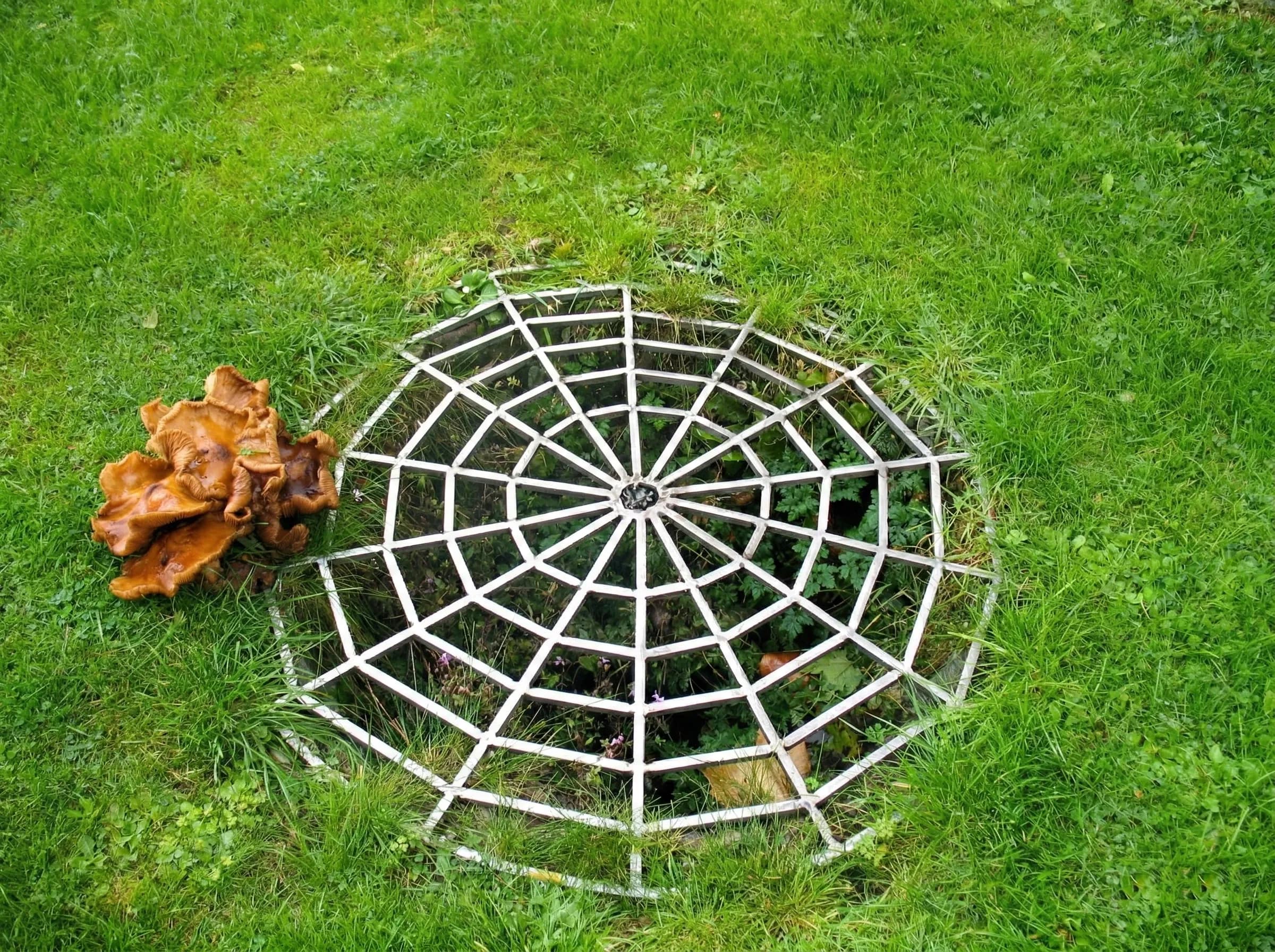

“Hand-crafted stainless steel grills for the Grade I listed Goldney Grotto at Bristol University. Features spiderweb and exoskeleton designs to protect historic light shafts.”
To protect the structural integrity and historical beauty of the Goldney Grotto, I was commissioned by Bristol University to design and create a series of bespoke stainless steel grills for the various light shafts exposed across the grounds of Goldney House.
Preserving a Grade I Masterpiece
The Goldney Grotto is a Grade I listed site of international significance, famous as the only grotto in Britain to feature both a shell room and running water. Lined with over 200 species of shell and intricate quartz crystals, the interior is a fragile environment that requires protection from external debris.
Functional Security: These grills cover the light shafts that provide essential natural illumination to the grotto’s subterranean chambers, including the central "Lion's Den".
Site-Specific Design: The project features two distinct sculptural motifs that harmonize with the historic garden setting:
The Radial Web: An intricate spiderweb design that mirrors the "hidden" nature of the grotto and ties into the recurring spider imagery found in my other university commissions.
The Protective Shell: A stylized exoskeleton design that pays homage to the hundreds of rare shells brought from the Caribbean and African waters to decorate the grotto walls in the 18th century.
Heritage-Grade Materials: Crafted from high-grade stainless steel, these grills provide a permanent, maintenance-free solution that protects the shafts while remaining visually sympathetic to the surrounding Grade II listed gardens.
Integrated Artistry
True to the spirit of the gardens, the grills are not merely functional covers but pieces of sculpture. The web-patterned grills feature a central stainless steel spider, creating a moment of discovery for visitors exploring the Royal Fort Gardens. Installed at ground level, the metalwork is designed to sit naturally within the lawn and undergrowth, allowing the garden's real-world flora and fungi to grow around and through the design.
Historical Significance
The grotto was created between 1737 and 1764 by Thomas Goldney III and is decorated with rock crystal and pseudo-stalactites carved from Bath stone. My contribution adds a modern layer of protection to this 250-year-old landmark, ensuring its "shell-lined" beauty remains safe for future generations of students and visitors.